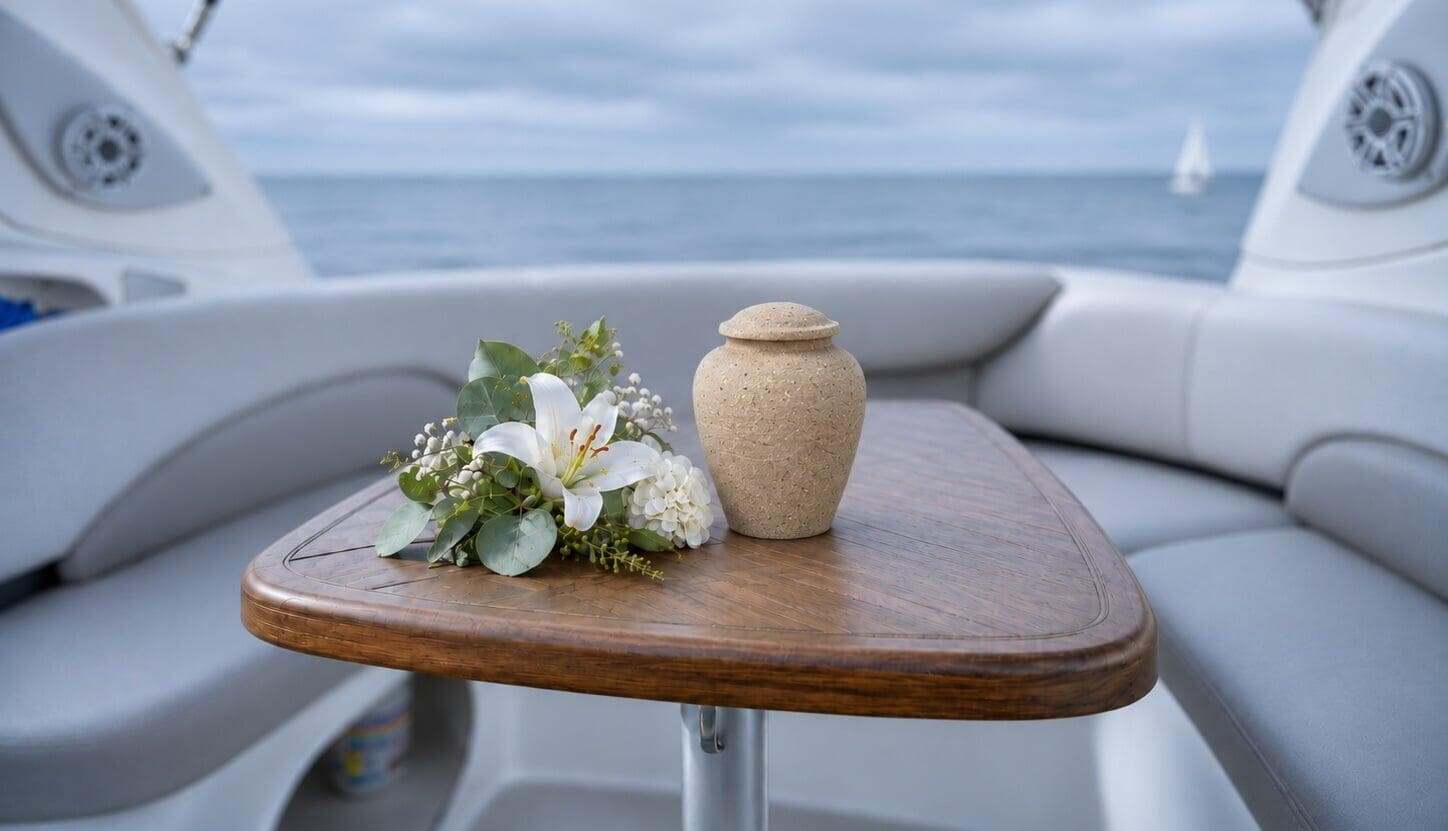
When planning an ash scattering at sea, families sometimes wonder whether they need to buy a special urn. You may have the ashes in a container from the crematory, or you may have seen biodegradable urns designed for water.
You do not need a special urn to scatter cremated remains at sea. Ashes can be released directly into the ocean, or they can be placed in a suitable container designed for burial at sea. Both are options, with practical and environmental differences worth understanding.
Scattering ashes without releasing an urn
For a direct scattering, the cremated remains are gently released into the water from the boat. The original urn or temporary container stays aboard and returns to shore.
This is a simple option for families who want to see the ashes being released. Families can share a few words or simply pause together.
You don't need to purchase a new urn solely for this purpose. If the container is sealed or difficult to open, ask your service provider about it beforehand. Wind and sea conditions matter, so follow the captain's guidance during the release.
What about biodegradable water urns?
A biodegradable water urn holds the cremated remains while the container itself is placed into the sea. The container is intended to break down or dissolve in water, providing a more contained release.
But “biodegradable” on a product label does not automatically mean it is appropriate for burial at sea. The U.S. Environmental Protection Agency (EPA) says a container used for cremated remains must not float, contain plastic, or contribute to marine debris. Ideally, it should degrade or dissolve within a relatively short time.
Before purchasing a product marketed as a floating urn, check how it behaves in water. Do not assume it meets EPA guidance.
If you're interested in bringing a water urn to a Sea Farewells ceremony, contact us beforehand with the product details so we can discuss whether it is suitable for the planned service. Not every family needs one.
Choosing what feels right for your family
The choice often comes down to how you would like the moment to unfold. Direct scattering keeps the ceremony simple and doesn't involve leaving a container in the ocean. An appropriate biodegradable urn offers another way to release the remains, particularly when a more contained release feels preferable.
Neither choice is inherently more meaningful. Families can discuss whether they want to take part in the release or prefer help from the crew. It's also worth considering wind and water conditions in advance.
What does the EPA require?
Under the EPA's general permit for burial at sea, cremated human remains must be released at least three nautical miles from land. The burial must also be reported to the EPA within 30 days. These rules apply to either method.
The EPA also prohibits placing materials that do not readily decompose in the marine environment. Natural flowers or wreaths made of readily decomposable materials may be permitted, but plastic flowers, synthetic decorations, and nondegradable urns should not be released.
For more on the offshore requirements, see our guide to the rules for scattering ashes at sea in Florida, or read the EPA's official burial-at-sea guidance.
Frequently asked questions
Can I bring the ashes in a regular urn?
Yes. A regular urn can be used to transport the remains to the boat. The urn stays aboard if the ashes are released directly. Do not place a nondegradable urn in the ocean.
Do all water-soluble or biodegradable urns qualify?
Not necessarily. The materials and design matter. Check that the container contains no plastic, does not float, and will not create marine debris. Ask your provider before bringing a particular product.
Does my family have to release the ashes ourselves?
No. Ask the service provider how the crew can help with the release.
Planning a farewell at sea in Miami
Sea Farewells offers both attended and unattended ash scattering services in Miami. We can discuss direct scattering or a suitable water urn before the ceremony.
If you have questions about bringing an urn or preparing the remains, contact Sea Farewells at (305) 978-5974. We're glad to help you plan a farewell that feels right for your family.
Source: U.S. Environmental Protection Agency, Burial at Sea. Regulations and guidance reviewed November 9, 2026.