Families ask this question in two different ways. Some ask because a death is recent and they are trying to work out how quickly they need to decide. Others ask because years have gone by, the urn is still in a cupboard, and they have started to wonder whether they have done something wrong.
Florida's cremation statutes set no deadline to scatter cremated remains, and they do not restrict how long you may keep them. A family who scatters three weeks after a cremation and a family who scatters nine years later are on equally solid ground.
There is one exception, and it catches people out, so it is worth understanding clearly.
The one clock that exists
Under Florida Statute 497.607, if cremated remains have not been claimed within 120 days of the cremation, the funeral or direct disposal establishment holding them may dispose of them. The statute lists what that disposal can involve: scattering at sea, a licensed cemetery scattering garden or pond, a church columbarium, or other methods set out by rule.
The important detail is where the remains are sitting. That 120-day period applies to remains still held by the establishment that carried out the cremation. It does not apply to an urn in your home. Once you have collected the remains, no clock is running at all, and nothing obliges you to act by any date.
So the question that matters is not how long you have waited. It is whether the remains have been collected. If they are still with the funeral home, and it has been some months, that is the situation worth resolving promptly. If they are with you, you have as much time as you need.
The statute also provides for something families are usually glad to know. Before disposing of unclaimed remains, the establishment must make a reasonable effort to determine whether they belong to a veteran of the U.S. Armed Forces, Reserve Forces, or National Guard eligible for burial in a national cemetery, or the spouse or dependent child of one. If they are, the establishment must arrange interment in a national cemetery rather than disposing of them otherwise.
If you are dividing the remains
Many families scatter a portion at sea and keep the rest, or divide remains among relatives in different states. Florida law has something specific to say about this.
Cremated remains are not property under Florida law, and they are not subject to partition the way an estate’s assets are. Dividing them requires the consent of the legally authorized person who approved the cremation. Where that person was the decedent, the consent falls to the next legally authorized person. If there is a disagreement, the statute directs that it be settled by a court.
In practice this rarely becomes an issue, because families usually agree. It matters when they do not. If relatives are divided about what should happen, the decision is not simply a matter of who is holding the urn.
Why waiting is so common
It is worth saying plainly that delay is normal, and it is not a sign that anything has gone wrong.
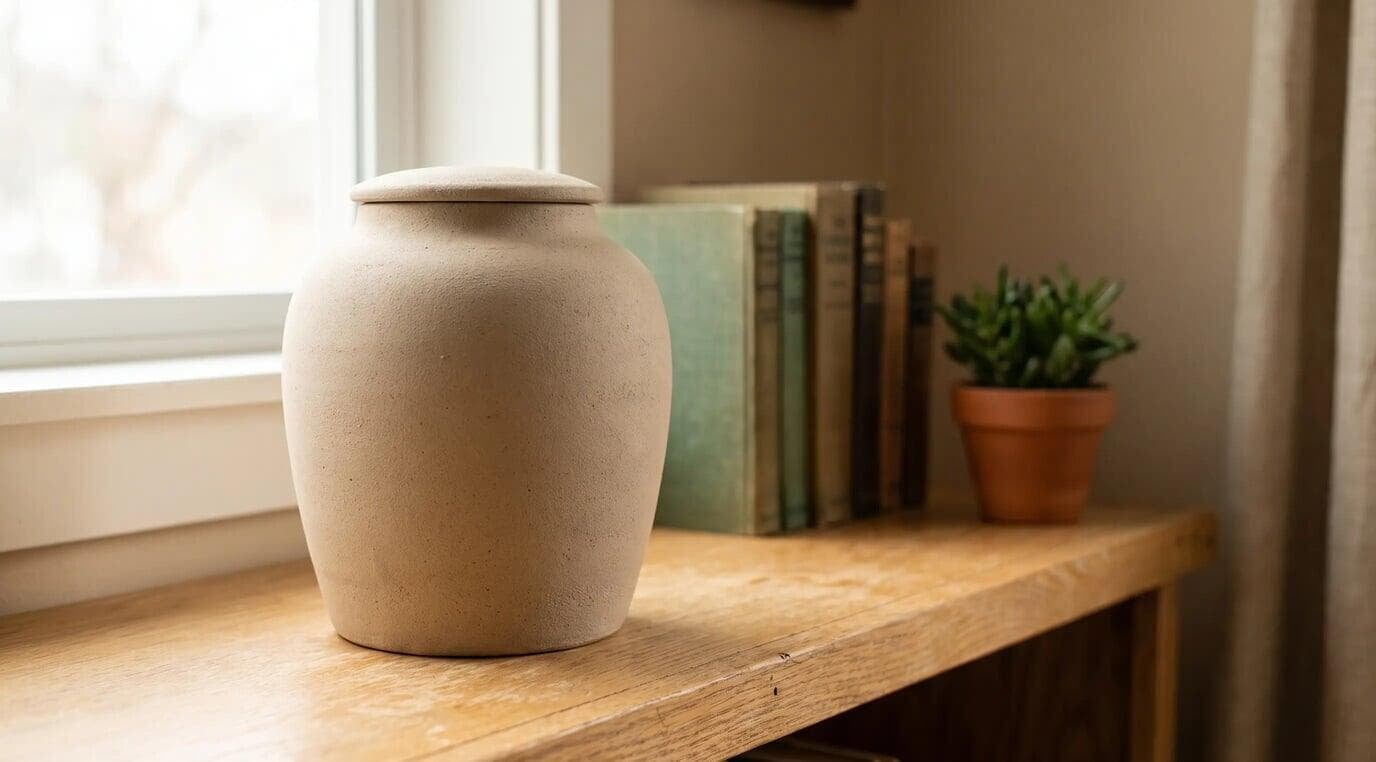
Cremated remains do not deteriorate. They dry and intert, and they keep indefinitely in an ordinary container in an ordinary room. Nothing is being lost by waiting.
Families wait for practical reasons and personal ones. Relatives are scattered across states and a date has to suit everyone. Someone is not ready. A particular season or anniversary feels more appropriate. Occasionally the urn simply stays where it was put, and years pass, and eventually somebody raises it again.
None of that requires an explanation, and it does not need to be justified to anyone.
What does affect timing
Where the law is silent, ordinary practicalities are not.
An ocean scattering depends on conditions at sea, so a date can move for weather. Booking further ahead gives more room to accommodate a specific day. If relatives are travelling, that usually sets the schedule more than anything else does.
These are scheduling questions rather than legal ones, and they are worth thinking about only once you have decided you are ready.
When you are ready
If you are considering a sea scattering in Miami, whether the cremation was last month or a decade ago, we are glad to talk through the options and the timing with you.
or call us at (305) 978-5974.
Sources
- Florida Statute 497.607, Cremation; procedure required — the 120-day period for unclaimed remains, the veteran interment provision, and the rules on dividing cremated remains.
This article summarizes Florida law as published at the time of writing and is not legal advice. If your situation involves a dispute among family members, or remains held by an establishment for an extended period, consult an attorney or contact the establishment directly.